
Sale price
$1699
The Song of the Swan
Ages 8–12 · 2023
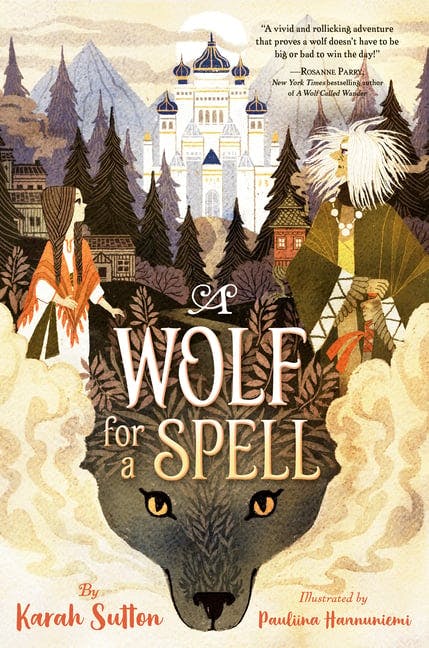
Written by Karah Sutton · Illustrated by Pauliina Hannuniemi
A wolf and a witch swap bodies to battle a wicked tsar threatening the forest.
Zima, a wolf taught to fear humans, must ally with the witch Baba Yaga to save her family. But when a spell swaps their bodies, Zima finds herself in a new form and a new adventure. Joined by Nadya, a village girl with her own quest, they uncover a shared enemy. As danger looms, Zima must rally wolves, witches, and villagers to confront a malevolent tsar threatening their world. Can they unite in time to save the forest?
"I am the forest, it flows through me. And now, I will flow through it. And in this way, I'll always be here, surrounding you, a part of you."
— from the book
The Girl Who Drank the Moon meets Pax in this fantastical tale of a wolf who forms an unlikely alliance with Baba Yaga to save the forest from a wicked tsar.
Since she was a pup, Zima has been taught to fear humans–especially witches–but when her family is threatened, she has no choice but to seek help from the witch Baba Yaga.
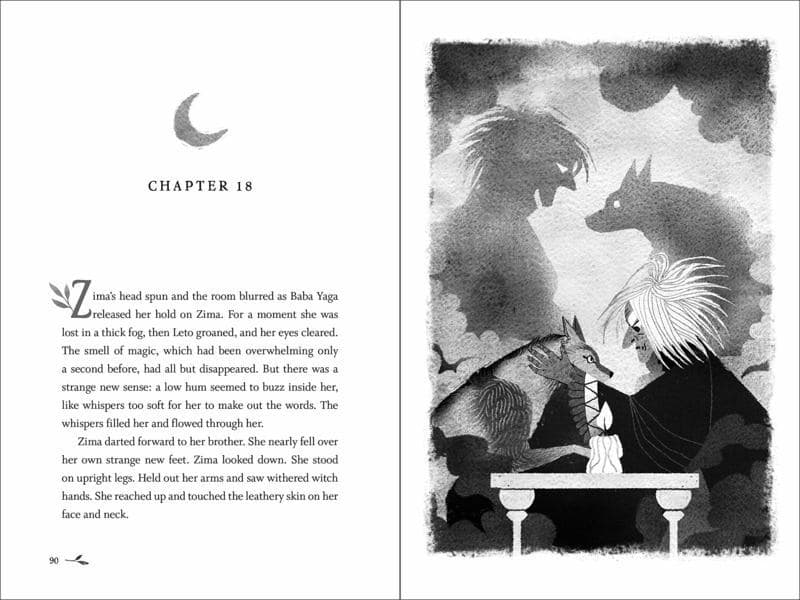
Baba Yaga never does magic for free, but it just so happens that she needs a wolf’s keen nose for a secret plan she’s brewing . . . Before Zima knows what’s happening, the witch has cast a switching spell and run off into the woods, while Zima is left behind in Baba Yaga’s hut–and Baba Yaga’s body!
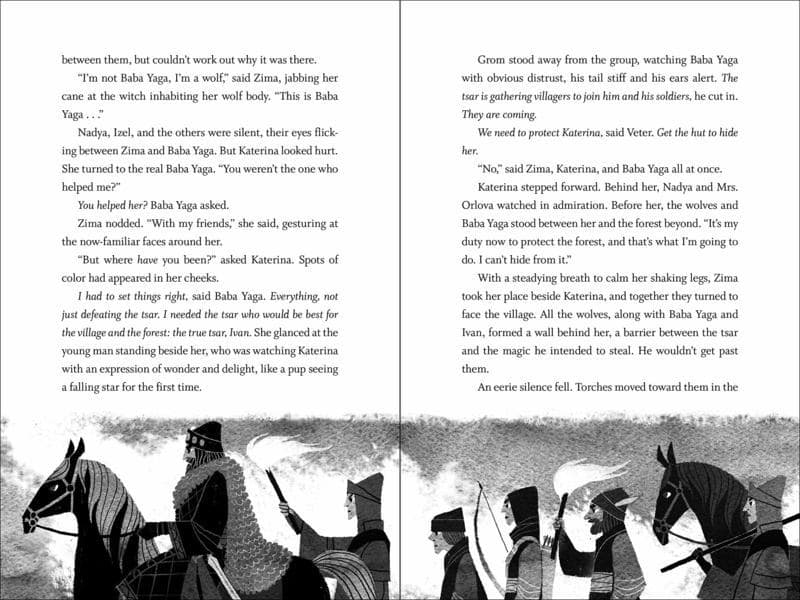
Meanwhile, a young village girl named Nadya is also seeking the witch’s help, and when she meets Zima (in Baba Yaga’s form), they discover that they face a common enemy. With danger closing in, Zima must unite the wolves, the witches and the villagers against an evil that threatens them all.
“Karah Sutton has crafted a vivid and rollicking adventure that proves a wolf doesn’t have to be big or bad to win the day!” –Rosanne Parry, New York Times bestselling author of A Wolf Called Wander
***Pre-reading Questions:***
Look closely at the cover for A Wolf for a Spell. What do you think will happen in the story based on the cover alone? What are different ways the title could be interpreted?
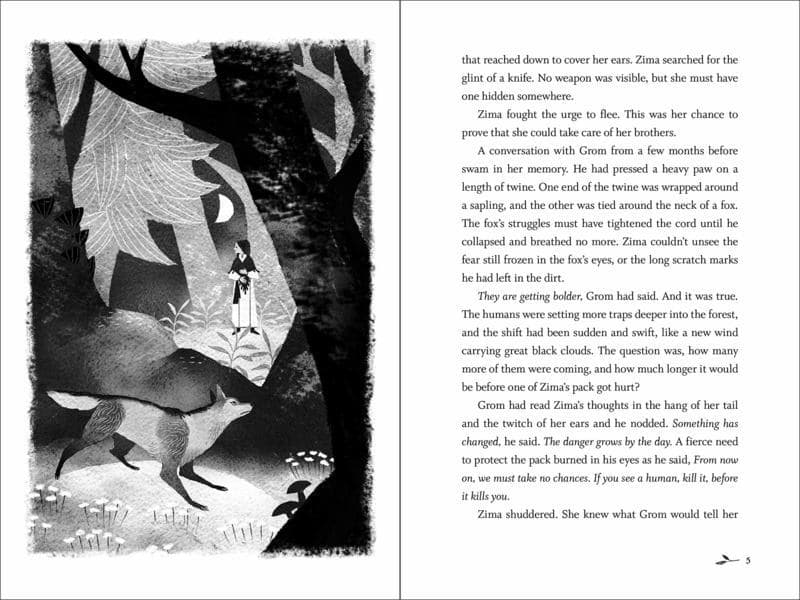
The first sentence of the book is “Fear clenched its jaws around Zima as she recognized the smell of magic.” What images do you think of when reading this sentence? What are some ways you could describe the feeling of being scared?
***End of book discussion/essay prompts:***
How familiar were you with Russian fairytales before reading A Wolf for a Spell? What are some things you recognize from other fairytales that you know? How are those things similar or different?
What do you think the author is saying about the relationship between humans and the forest? Do you agree or disagree? Support your answer with quotes from the book.
Both Zima and Nadya were told to fear others in the village and forest, and they learn to overcome that fear. What is a time when you had to face a fear? Were you able to overcome it? How did it make you feel then and now?
***Questions while reading:***
Chapter 1: Sentences like “She nudged Leto and pointed with her snout” work to remind the reader that they are immersed in the world of a wolf pack. How does the author use description and senses to convey a wolf’s point of view?
Chapter 2: The author writes from a different character’s point of view in this chapter, this time focusing on Baba Yaga. What are some advantages to telling a story from multiple points of view?
Chapter 3: How does the sentence “But as she approached, she discovered that these trees were unfamiliar too. They crowded around her, strangers looming” work to give a sense of Nadya’s state-of-mind?
Chapter 4: Zima describes the witch’s words as “clinging to her like moss on stone”. What is a way that you could describe something “getting under your skin” without using that phrase?
Chapter 8: Katerina tells a story about nearly having been adopted. Why do you think the author included it? What does this story reveal about Katerina’s character?
Chapters 9: What effect does the following sentence have: “smoke drifted from the chimney in faint snoring breaths”? Why do you think the author described the hut that way?
Chapter 12: The author describes “a sharp sound—almost like the trumpet of a goose—pierced the air, three blasts.” What is the author describing and why do you think she used this way of describing it?
Chapter 20: The author uses a “flashback” to show us something that happened in Baba Yaga’spast. Why do you think she did this?
Chapter 27: Zima has her first glimpses of human life. What are some things that she notices that are unfamiliar to her, which are familiar to most humans? What effect does that have on the story?
Chapter 29: As Nadya observes the castle, what are things she notices that Zima would not? How does the author use their differing points of view to reveal different aspects of being human?
Chapter 32: Zima observes how humans are similar and different to a wolf pack, which is a running theme through the story. What are some other themes that you can identify?
Chapter 35: How do the descriptions of the tsar in this chapter tell the reader what Zima thinks of him? How do they tell the reader what to think of him?
Chapter 40: The author uses short sentences in this passage: “One minute passed. Then two. She lowered her hands and held them close to her chest to warm them. The hut wasn’t coming. And then she heard it. A distant thumping sound bashed through the trees.” What effect do you think this has on the reader?
Chapter 42: The weather gets very intense in this chapter, with a winter storm in full force. Why do you think the author decided for this to happen?
Chapter 45: How has Nadya changed over the course of the story? Have the other characters changed also?
Chapter 49: The final chapters show strong themes of togetherness and family. What are some other themes you can identify in the book?
"Almost exactly 5 years. I spent two years writing it and then three years revising it with my agent and editor. In that time I went through more than 15 versions of the book before reaching the final you see in print!"
“This delightfully magical tale is filled with everything readers of fantasy and fairy-tale retellings adore: magic, heroism, and whimsy. . . . Sutton’s latest middle grade venture is one not to be missed. A must-purchase where fairy-tale retellings and folklore are loved.”
Critic · Starred review
“Sutton weaves together the three protagonist's storylines with skill, building toward an exciting denouement…. [A] warmhearted take on a Russian fairytale.”
Critic
“Sutton conjures up a charming debut filled with magic and friendship. . . . Fun and twisty, this fairy tale that evokes imperial Russia has a timeless air.”
Critic


Surprise a reader with their next favorite book.
Spotted a mistake or something missing? Improve this page.
Are you the author or illustrator? Claim your book.
Top contributors: Karah Sutton · The Goodfather · Elaine R.


