Sale price
$799
Deep and Dark and Dangerous
Ages 10–12 · 2007
Written by Mary Downing Hahn
Book #1 in the Anna series
Anna navigates childhood adventures and family tensions in pre-WWI Baltimore.
In stock. Also at Amazon.
In pre-WWI Baltimore, eight-year-old Anna faces the challenges of childhood with wit and determination. From mastering long division to daring roller-skate escapades, Anna's year is filled with triumphs and trials. Her spirited clashes with her strict mother over a red coat and a secret birthday party reveal the tension and love within her family. As Anna grows, she earns the privilege of a solo trolley ride to lunch with her father, marking her journey toward independence. Will Anna's cleverness and courage help her navigate the wonders and woes of her world?
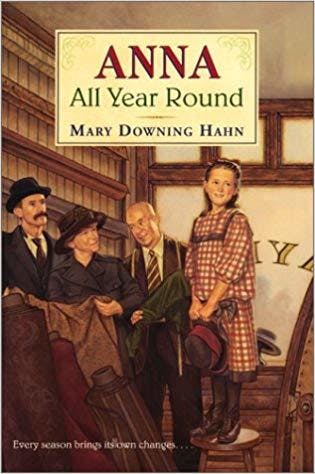
Based on the childhood of the author’s mother, this engaging episodic novel follows the everyday adventures of third-grader Anna Sherwood growing up in pre-WWI Baltimore. Anna is “ein kluges M,dchen”-a clever girl, in her mother’s native German-who likes reading better than arithmetic (“All you can do with numbers is make prob-lems. But you can make stories and poems with words”); she’s also something of a tomboy. The novel moves from fall to summer as Anna conquers long division (having previously resorted to cheating); battles with her mother over the color of a new winter coat (Anna wants bright red, Mother wants “drab and boring” brown); “split[s] her chin wide open” roller-skating down the steepest hill in Baltimore on a dare; and is judged grown-up enough to ride the trolley downtown to have lunch with her father. All the chapters are informed by Hahn’s able evo-cation of time and place-a Baltimore of groceries delivered by horse-drawn wagon and streets lit by gas lamps-and of the specific characters who inhabit it. Many of the episodes are driven by the tension between Anna and her strict, old-fashioned mother (in one of the best chapters, “Anna’s Birthday Surprise,” Anna, desperate to have a birthday party despite Mother’s refusal, secretly issues invitations and then, with a mixture of hope and dread, waits to see what will happen when her friends arrive); the tension is always defused by the unqualified love between Anna and her father. Hahn’s use of the present tense to tell Anna’s stories helps keep nostalgia at bay, as does the energetic, just-dashed-off quality of deGroat’s rough pencil sketches.


Surprise a reader with their next favorite book.
Spotted a mistake or something missing? Improve this page.
Are you the author or illustrator? Claim your book.
Top contributors: Elaine R.


