

Sale price
$1799
All Different Now
Ages 5–9 · 2013
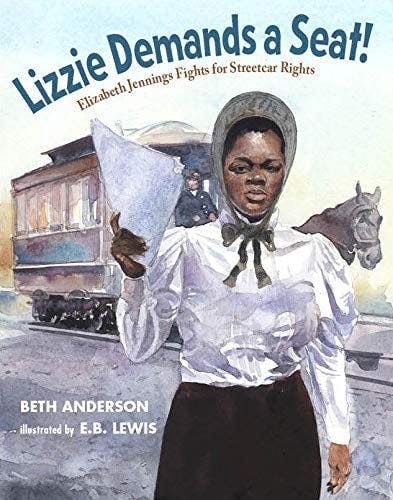
By Beth Anderson, E. B. Lewis (Illustrator), E.B. Lewis (Illustrator)
Denied a streetcar seat, a teacher's fight sparks a historic battle for equality.
In 1854, Lizzie Jennings, an African American teacher, is denied a streetcar seat in New York due to her race. Facing assault and threats, she bravely challenges the injustice. With future president Chester Arthur as her lawyer, Lizzie's courtroom victory becomes a landmark in the fight for equal rights on public transportation. Discover the untold story of her courageous stand that paved the way for future civil rights battles.
In 1854, Elizabeth “Lizzie” Jennings, an African American schoolteacher, fought back when she was unjustly denied entry to a New York City streetcar, sparking the beginnings of the long struggle to gain equal rights on public transportation.
One hundred years before Rosa Parks took her stand, Elizabeth “Lizzie” Jennings tried to board a streetcar in New York City on her way to church. Though there were plenty of empty seats, she was denied entry, assaulted, and threatened all because of her race–even though New York was a free state at that time. Lizzie decided to fight back. She told her story, took her case to court–where future president Chester Arthur represented her–and won! Her victory was the first recorded in the fight for equal rights on public transportation, and Lizzie’s case set a precedent. Author Beth Anderson and acclaimed illustrator E. B. Lewis bring this inspiring, little-known story to life in this captivating book.
Why do you think no passengers or onlookers objected to Lizzie's treatment?
What do you think would have happened if Lizzie had lost her temper?
How do Elizabeth Jennings' actions compare to Rosa Parks?
How does understanding this history help you understand our world today?
“…Anderson’s third-person text allows readers under Lizzie’s skin as her indignation at injustice mounts. Children will readily recognize both the conductor’s capricious cruelty and Lizzie’s anger that “being born a ‘free black’ in a ‘free state’ ” does not mean being “treated as equal.” Lewis’ dappled watercolors depict the action and extend it… Necessary.”
Critic · Starred review
“…Anderson’s vivid, well- researched narrative includes dialogue that “closely follows” accounts of Jennings’ experience that appeared in newspapers at the time. Using brighter hues than his usual palette, Lewis creates a series of vibrant, expressive watercolor paintings that transports viewers back in time, while portraying characters as distinct individuals. A memorable picture book introducing a nineteenth-century defender of civil rights.”
Critic · Starred review
“…When Jennings is thrown off the streetcar, shown in a dramatic spread, a white witness steps forward, and Jennings decides to take her case to court—a risk: “if she failed to win, she could make it worse.” But, supported by her community, she does win, notching the first victory in what would become a 100-year-long battle to end segregation on public transportation. Shimmering jewel-toned watercolors blur and delineate details in Lewis’s paintings…”
Critic · Starred review
“…The well-chosen language—“She’d been rejected, restricted, and refused by schools, restaurants, and theaters”—is a pleasure to read aloud. Departing from the somber palette he used for Jabari Asim’s Preaching to the Chickens, Lewis employs pastel colors, shades of blues, pinks, and purples, and plenty of background yellow to portray the characters and their surroundings. This lightens the story and supports its positive outcome. Shadowy background figures remind careful readers of the larger community that supported Jennings and were affected…VERDICT An important story beautifully told.”
Critic · Starred review


Surprise a reader with their next favorite book.
Spotted a mistake or something missing? Improve this page.
Are you the author or illustrator? Claim your book.
Top contributors: booklover51041324 · Marmee