
Sale price
$799
Three Young Pilgrims
Ages 7–10 · 1992
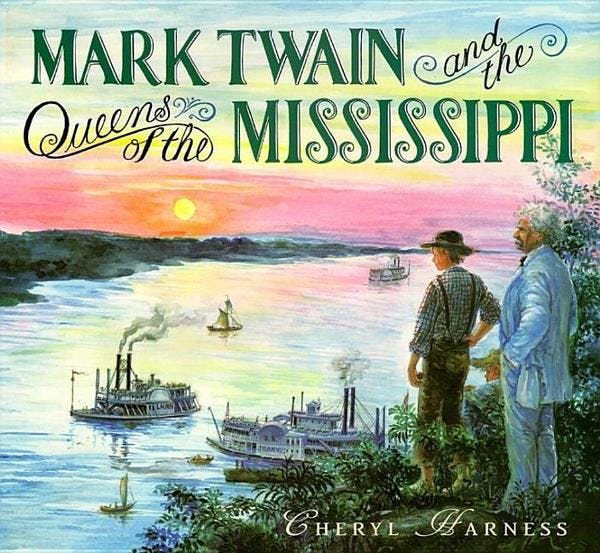
Written by Cheryl Harness
Discover how the Mississippi River shaped a literary legend's journey and stories.
Not currently available from Bookroo. Also at Amazon.
Samuel Clemens, known as Mark Twain, was captivated by the Mississippi River and its steamboats from a young age. His dream of becoming a steamboat pilot came true, deeply influencing his writing. When the Civil War halted river traffic, Clemens ventured west, crafting humorous tales under his famous pen name. Explore how the river's majesty and the steamboat era intertwined with Twain's life, inspiring his beloved stories. What secrets of the river did Twain uncover, and how did they shape his legacy? Dive into a vivid narrative of adventure and inspiration along America's greatest river.
“Ste-e-e-e-amboat’s a’comin!” As a boy, Samuel Clemens loved it when a steamboat traveled up or down the Mississippi River to his town of Hannibal, Missouri. He’d run to the river bank and stare longingly at the boat that looked like a floating wedding cake, wishing he could be one of the lucky passengers or crew. As a young man, Clemens made his dream come true by working his way up to steamboat pilot. When the Civil War temporarily stopped the steamboats, Sam went west, where he began writing funny stories for newspapers. He signed one story “Mark Twain,” a river term meaning two fathoms deep. It was a name he would eventually make famous through his lectures and books, the most popular of which were based on his boyhood days on the banks of the Mississippi. Mark Twain’s life was curiously entwined with the Mississippi River and the majestic age of the steamboats. With a lively narrative sprinkled with quotes from Twain himself and dramatic panoramic paintings, Cheryl Harness has created fascinating portraits of America’s biggest river and the great man it inspired.


Surprise a reader with their next favorite book.
Spotted a mistake or something missing? Improve this page.
Are you the author or illustrator? Claim your book.
Top contributors: Elaine R.