
Sale price
$1899
Dancing Hands
Ages 4–8 · 2019
Written by Margarita Engle
A young poet defies societal norms and fights against slavery in 19th-century Cuba.
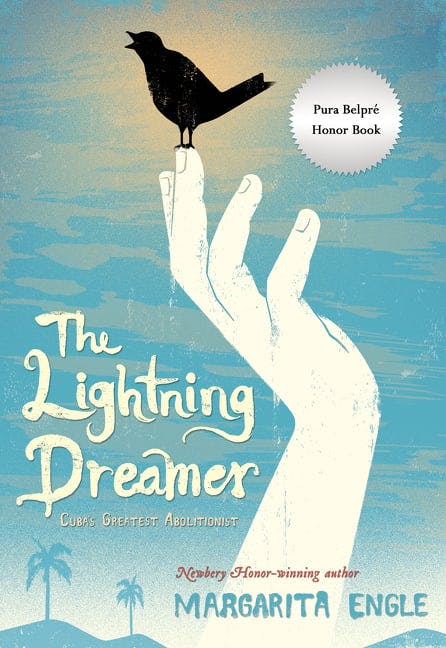
In 19th-century Cuba, young poet Tula defies an arranged marriage and uses her verses to challenge the brutal institution of slavery. As a daring abolitionist, she risks everything to fight for justice. Will her words ignite change in a world that demands her silence? Discover the courage of a girl who transforms her passion for books into a powerful weapon against oppression. Tula's story is a testament to the strength of the human spirit and the enduring power of poetry.
“I find it so easy to forget / that I’m just a girl who is expected / to live / without thoughts.” Opposing slavery in Cuba in the nineteenth century was dangerous. The most daring abolitionists were poets who veiled their work in metaphor. Of these, the boldest was Gertrudis Gómez de Avellaneda, nicknamed Tula. In passionate, accessible verses of her own, Engle evokes the voice of this book-loving feminist and abolitionist who bravely resisted an arranged marriage at the age of fourteen, and was ultimately courageous enough to fight against injustice. Historical notes, excerpts, and source notes round out this exceptional tribute.


Surprise a reader with their next favorite book.
Spotted a mistake or something missing? Improve this page.
Are you the author or illustrator? Claim your book.
Top contributors: Elaine R. · Literary Leslie