
Sale price
$1299
Disney Wonderful World of Space
Ages 6–13 · 2007
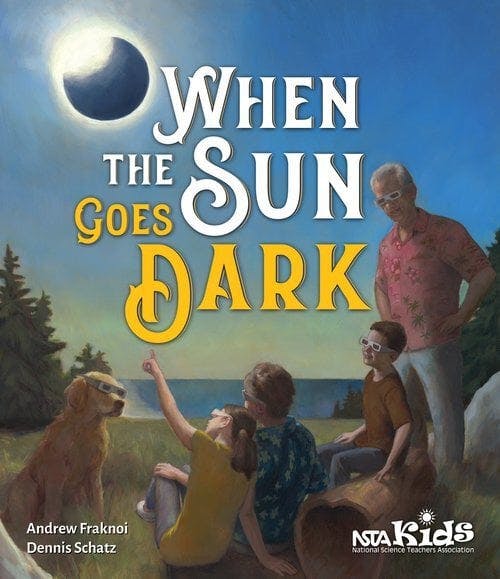
Written by Andrew Fraknoi and Dennis Schatz
Discover the science of eclipses through a family's creative experiments.
Join two curious children and their grandparents as they transform their living room into a cosmic stage, using everyday items to unravel the mysteries of solar and lunar eclipses. With a lamp, tennis ball, and Hula Hoops, they recreate celestial events, sparking wonder and understanding. As they venture outdoors, they explore safe ways to witness a solar eclipse and delve into the secrets of sunspots and moon phases. This engaging journey offers hands-on activities that illuminate the science behind these awe-inspiring phenomena, making it perfect for budding astronomers and curious minds alike.
This illustrated book is a fun way to get young astronomers ready for August 2017, when millions of North Americans will have the rare chance to witness a solar eclipse. The book tells how two curious children and their grandparents re-create eclipses in their living room using a lamp, a tennis ball, two Hula Hoops, and Ping-Pong balls. Later, in the backyard and around the house, the family explores safe ways to view a solar eclipse and ponders phenomena from sunspots to phases of the Moon. Written by the authors of NSTA’s award-winning book Solar Science, When the Sun Goes Dark gives children and adults hands-on techniques for learning the science behind eclipses of the Sun and Moon.


Surprise a reader with their next favorite book.
Spotted a mistake or something missing? Improve this page.
Are you the author or illustrator? Claim your book.
