
Sale price
$1999
Choosing Brave
Ages 8–11 · 2022
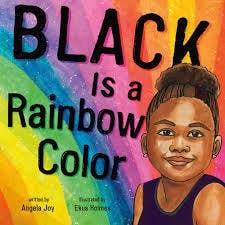
Written by Angela Joy · Illustrated by Ekua Holmes
A child explores the profound meaning of Black beyond the rainbow's colors.
A child embarks on a reflective journey, discovering the profound significance of Black in a world of vibrant colors. From everyday objects to historical figures, Black is more than a hue—it's a testament to a rich legacy and thriving community. As they ponder the absence of Black in rainbows, they uncover stories of resilience and change, celebrating a culture that continues to inspire. This lyrical exploration invites readers to see beyond the spectrum and embrace the depth of Black's beauty and history.
"Black is the skillet for bread to fry. Black are dreams and raisins . . . left out in the sun to die."
— from the book
A child reflects on the meaning of being Black in this moving and powerful anthem about a people, a culture, a history, and a legacy that lives on.
Red is a rainbow color.
Green sits next to blue.
Yellow, orange, violet, indigo,
They are rainbow colors, too, but
My color is black . . .
And there’s no BLACK in rainbows.
From the wheels of a bicycle to the robe on Thurgood Marshall’s back, Black surrounds our lives. It is a color to simply describe some of our favorite things, but it also evokes a deeper sentiment about the incredible people who helped change the world and a community that continues to grow and thrive.
Stunningly illustrated by Caldecott Honoree and Coretta Scott King Award winner Ekua Holmes, Black Is a Rainbow Color is a sweeping celebration told through debut author Angela Joy’s rhythmically captivating and unforgettable words.
As Joy intended, Black is a Rainbow Color is the perfect “point of departure . . . launching a great exploration into this dynamic slice of American life and all the complexities that go with it.” The text is lyrical (“Black are the bottoms of summertime feet”, “Black is the power of movement in pain.”) and gorgeously rich with intertwined references to varied elements of black culture, including Civil Rights leaders (Martin Luther King Jr.), barrier breakers (Thurgood Marshall), musical contributions (rhythm and blues), and creatives (Maya Angelou), to name just a few. The masterful use of passing references to momentous moments, people, and contributions (in both the text and illustrations) sparks interest and curiosity, which is then partially quenched by the host of further educational materials and resources located in the back of the book, including a playlist, descriptions of events and people referenced throughout the book, and a few select poems by African-American poets. The illustrations match the text in their richness and vibrancy, the collaged illustrations incorporating newspaper clippings, maps, sheet music, and photographs. Beginning with a thoughtful, provoking question for a child—why isn’t black in the rainbow?—Black is a Rainbow Color is the inspiring jumping-off point for many discussions.
“Masterful text and illustrations seamlessly educate and inspire.”
Bookroo Editorial
Reviewed January 2020
Where this book stands out
Heritage
The “Heritage” badge is awarded to exceptional books celebrating personal heritage and family history.
The back of the book includes a playlist. Are there any songs you don't recognize? With an adult's help, find them to listen to.
The back of the book also includes explanations for some of the cultural references included throughout the text. Are there any cultural references you don't understand? Take a minute to learn about them. Then go back through the book and see if you can find the references slipped into the text and illustrations.
5.5
out of 7
“I admire how well the author, Angela Joy, ties in songs, poems, music, and other aspects of black culture, which she explains in detail at the end of the book.”
Trusted reviewer
“In bright paints and collage, Holmes shows the rainbow of black skin tones on each page while Joy’s text describes what “Black is” physically and culturally. It ranges from the concrete, such as “the braids in my best friend’s hair,” to the conceptual: “Black is soft-singing, ‘Hush now, don’t explain’ ” . . . Both a beautiful celebration of black culture and an excellent first black history book for young children.”
Critic


Surprise a reader with their next favorite book.
Spotted a mistake or something missing? Improve this page.
Are you the author or illustrator? Claim your book.
Top contributors: Gabrielle Pitzer · Marmee