
Sale price
$1799
Manjhi Moves a Mountain
Ages 4–8 · 2017
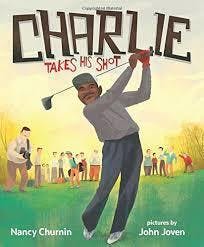
Written by Nancy Churnin · Illustrated by John Joven
A golfer challenges racial barriers to change the game forever.
Charlie Sifford dreams of playing in the PGA, but the 1930s' racial barriers stand in his way. Undeterred, he fights to break the color line, facing discrimination at every turn. In 1960, he triumphs, becoming the first Black golfer to win a PGA tournament. Yet, the struggle continues as hotels and clubs refuse him basic rights. Will Sifford's determination and love for golf overcome the prejudice that seeks to hold him back? Discover the inspiring journey of a man who changed the face of golf and paved the way for future generations.
Charlie Sifford loved golf, but in the 1930’s only white people were allowed to play in the Professional Golf Association. Sifford had won plenty of black tournaments, but he was determined to break the color barrier in the PGA. In 1960 he did, only to face discrimination from hotels that wouldn’t rent him rooms and clubs that wouldn’t let him use the same locker as the white players. But Sifford kept playing, becoming the first black golfer to win a PGA tournament and eventually ranking among the greats in golf.
Most children know the story of how Jackie Robinson broke the color barrier in Major League Baseball. That made me wonder about other firsts in other sports. When I found out that Charlie Sifford was the first African American golfer on the PGA tour, I knew I wanted to know more. Then I found out what a great guy he was and how Jackie Robinson inspired him and I knew I had to share his story.
Charlie Sifford is a great example of perseverance. There was no reason to think that he was going to break through a sport that was as segregated as golf. But he wouldn't give up. And he found people who supported his dream, including his wife, Rose, his friend, Jackie Robinson, and a lawyer that he met named Stanley Mosk, who took up his cause. The other wonderful thing about Charlie is that he didn't do this just for himself. By the time he made his breakthrough, he was an older player, past his prime years. But he knew he was doing this not just for himself but for the players that would follow so that every kid, everywhere, would find this sport open to all.
I hope that this book will encourage kids everywhere to be inclusive. All Charlie wanted was a chance to play. That's why I created a project to go along with the book called We Helped Them Take Their Shots. I hope kids, through their parents and teachers, will share stories of how they gave someone a chance, reached out a hand in friendship, included someone who had been left out.
Follow your dreams. Don't be deterred. Don't listen to the jeers or the laughter. Keep working hard and you will get to where you want to go. And when you get to where you want to go, don't forget to open the door for others. This is not only a story about Charlie, but about how Jackie Robinson, who had achieved his dream, never stopped trying to help others achieve theirs.
I was so honored to be invited to read this book at the Ruby Bridges Reading Festival at the National Civil Rights Museum in Nashville, Tennessee where I got to meet the incredible Ruby Bridges herself. She is such an inspiration and an incredible example of someone who would not be deterred from achieving her dream -- going to a school where African American children had not previously been allowed -- and then going on to spend the rest of her life helping others achieve their dreams through promoting literacy and being inclusive and kind.




Surprise a reader with their next favorite book.
Spotted a mistake or something missing? Improve this page.
Are you the author or illustrator? Claim your book.
