Sale price
$1899
Chapter Book · Ages 5–10 · 2016
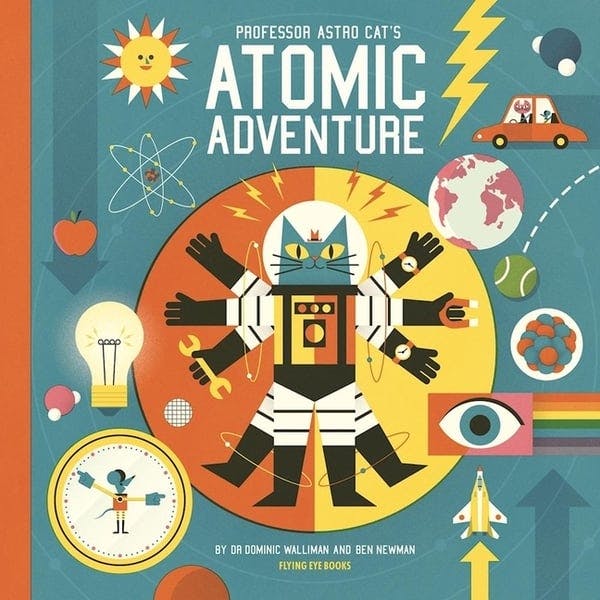
Professor Astro Cat's Atomic Adventure
One professor cat, sixty-four pages, and the whole of physics from atoms to relativity.
$19.99Save 5%
Hardcover
Physics has a reputation as the hard one — the subject held back for high school and then taught in symbols. But almost every big idea in it starts as something a five-year-old has already noticed and would like explained. A dropped spoon is gravity. The wall you cannot walk through is what matter is made of. The rainbow on the kitchen floor is an entire chapter on light, and the question of why the sun keeps coming back is orbital mechanics asked in the only words a child has. The good books do not simplify those answers into nonsense; they hand over the real word and the real reason, and trust that a child who can name twenty dinosaurs can manage “friction.”
Bookroo’s collection of 191 physics books starts at board-book quarks and ends at black holes, and our editors’ shortlist of thirteen follows the order children actually meet the subject in: pushes and pulls first, then what the world is made of, then light, gravity at cosmic scale, and finally the strange rules that take over once things get small enough. The list runs from a twenty-four-page board book to a 192-page astrophysics primer, so there is an entry point for a toddler and a handoff for a sixth grader. Start with the shortlist, then use the shelves below, and follow the related topics into forces, gravity, light, matter, quantum theory, and the physicists themselves.
One professor cat, sixty-four pages, and the whole of physics from atoms to relativity.
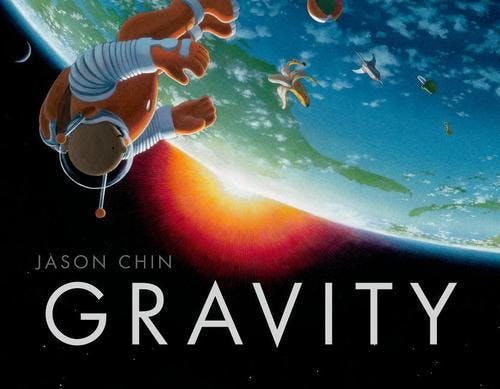
A few dozen words and a solar system’s worth of pictures explain why nothing floats away.
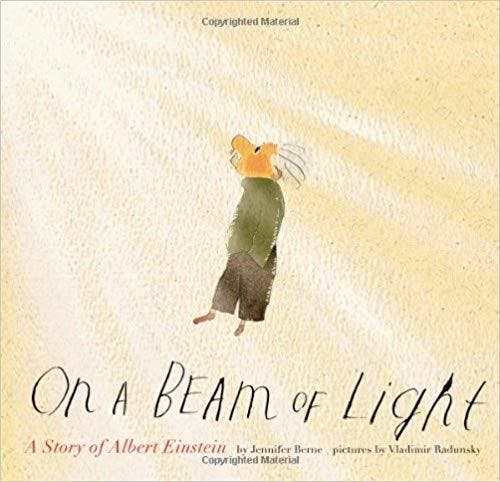
A boy imagines riding beside a beam of light and follows the question for the rest of his life.

Every concept in the physics curriculum turns up as a character with opinions about its own behavior.
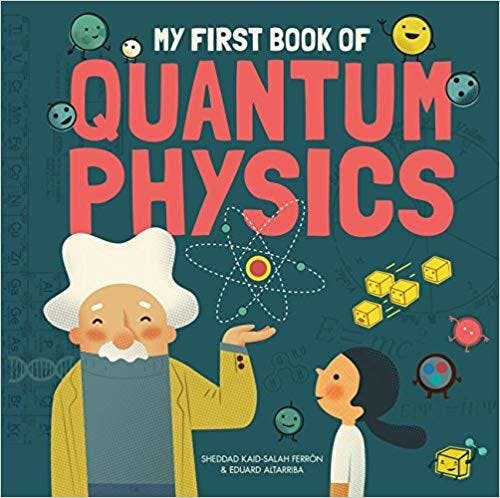
Photons, wave-particle duality, and Schrödinger’s uncomfortable cat, explained without a single equation to take on faith.
The Big Bang, dark matter, and the physics of the whole universe, adapted for readers with somewhere else to be.
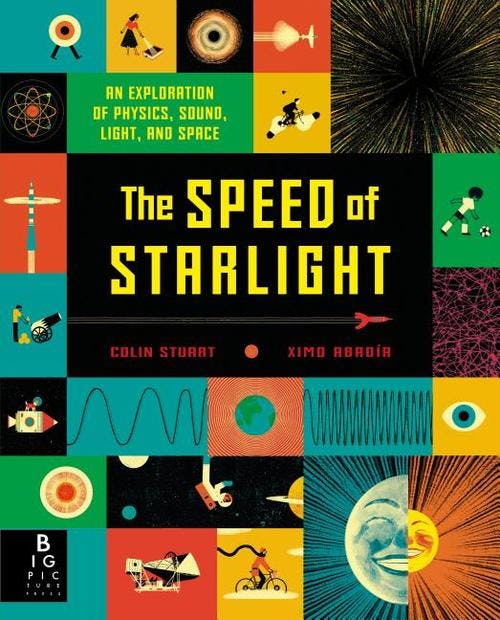
Sound, light, matter, and the speed limit of the universe, delivered as eighty pages of poster art.
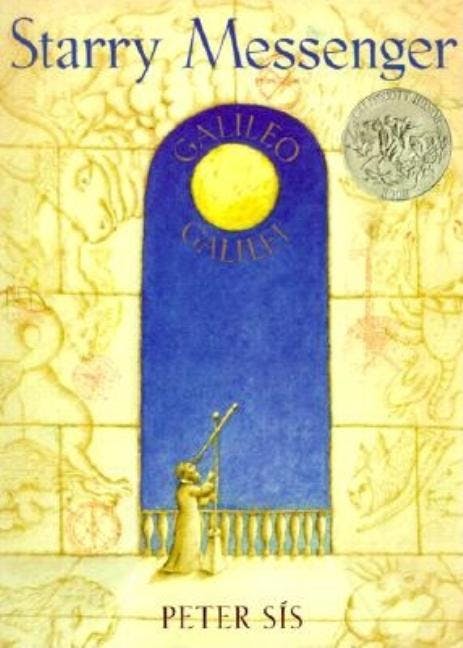
One man builds a better telescope, looks up, and reports what is actually there.
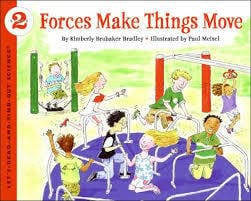
Every push and pull in an ordinary day, named and explained on the floor where it happened.
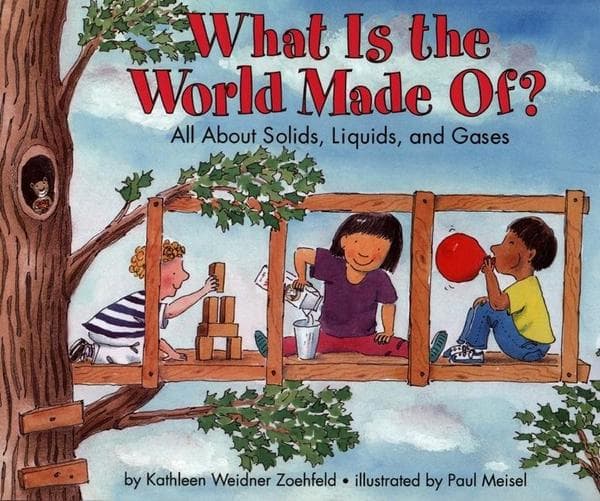
Why you can walk through air, swim through water, and stop dead at a wall.
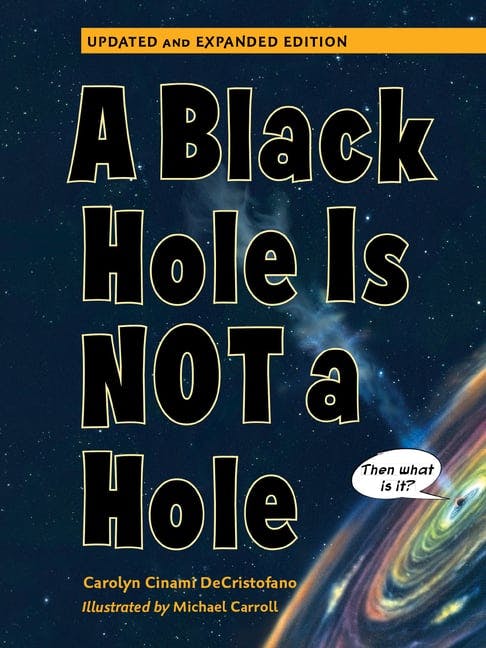
Not a hole, not a vacuum cleaner, and much stranger than either.
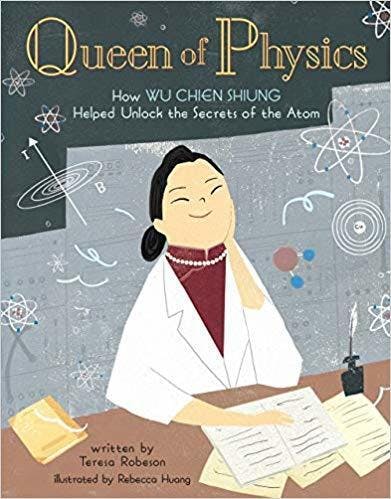
The physicist who designed the experiment that proved a law of nature was not a law after all.
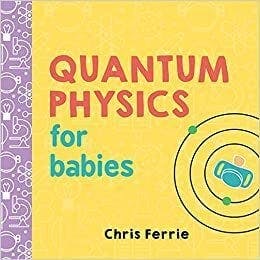
Balls, boxes, and energy levels: quantum mechanics reduced to shapes a one-year-old can chew on.
Quarks, gravity, thermodynamics, and general relativity in sturdy first books that use the real vocabulary instead of a baby substitute for it. Ages 0–4.
Discover the wonders of particle physics through a baby's eyes.
Discover the wonders of flight, from birds to rockets, in a baby's world.
Discover how energy flows from the sun to Baby in this playful science journey.
Explore quantum mysteries with a playful cat in a science board book for curious minds.
Discover the secrets of atoms' centers in a playful journey for young minds.
Introduce your baby to the wonders of quantum physics with playful simplicity.
Introduce your baby to the wonders of light with a playful look at optics.
Discover why things fall in this playful exploration of gravity for little ones.
Introduce your baby to Newton's laws of motion with playful simplicity.
Explore physics from A to Z in a colorful, simple way.
Introduce babies to the strange world of quantum particles with a playful twist.
Introduce your baby to Einstein's theory with simple concepts of spacetime and black holes.
Read-alouds and classroom explainers on pushes and pulls, solids and liquids and gases, shadows, magnets, day and night, and the scientists who worked it all out. Ages 3–9.

A child imagines having a birthday party on the Moon
Discover how a young scientist became the first American woman in space.

Witness the world transform as a solar eclipse unites us all.

Discover the tiny world of nanoscience and its wonders, from self-cleaning windows to lightweight airplanes.

Discover how Marie Curie's perseverance shattered barriers in science.
Curiosity leads a boy to unlock the universe's secrets.
A scientist's groundbreaking discovery is overshadowed by bias.

A curious boy gazes at the stars, uncovering cosmic mysteries and inspiring future explorers.

Two brothers' basement experiments lead to a world-changing color discovery.
Bird builds a nest using push and pull. What's it waiting for?

Discover why Earth has day and night in just 24 hours.

Discover how a curious child became a revolutionary thinker.
Illustrated guides, family references, science comics, and biographies for readers ready for atoms, orbits, Newton’s laws, relativity, and black holes with the real terms attached. Ages 6–11.

Explore the machines and inventions that shape our world.
A young math enthusiast defies odds to help launch humanity to the moon.
The life story of renowned physicist Stephen Hawking.
The life of Albert Einstein, from his childhood to his death, is explored in this biography.
A visionary challenges the universe's secrets, risking everything for truth.
Discover the mathematician whose calculations launched NASA's early missions.
A biography of Sally Ride, the first American woman in space, from her childhood to her historic flight on the space shuttle Challenger.
The life of Isaac Newton, a brilliant but difficult scientist, is explored in this biography.

A boy searches for his mother in a parallel universe.
Join a class on a wild ride through electrical wires to uncover the secrets of electricity.
Discover the genius who reshaped science after being expelled from school.
A pioneering scientist defies odds to win two Nobel Prizes in male-dominated fields.