
Sale price
$1899
What To Do With a Box
Ages 3–8 · 2016
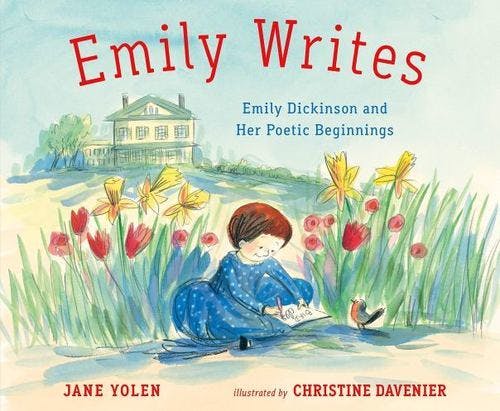
Written by Jane Yolen · Illustrated by Christine Davenier
A young girl's imagination bridges reality and poetry's magic.
Young Emily Dickinson finds magic in the everyday, scribbling and rhyming her way through childhood. As she explores the boundary between reality and imagination, Emily's poetic journey begins. What will she discover in the in-between? This enchanting tale offers a glimpse into the early life of one of history's most celebrated poets.
She thinks about the real and the unreal. Perhaps poems are the in-between, just as she is in between Austin and Vinnie.
— from the book
An imagined and evocative picture book account of Emily Dickinson’s childhood poetic beginnings. As a young girl, Emily Dickinson loved to scribble curlicues and circles, imagine new rhymes, and connect with the natural world around her. The sounds, sights, and smells of home swirled through her mind, and Emily began to explore writing and rhyming her thoughts and impressions. She things about the real and the unreal. Perhaps poems are the in-between. This thoughtful spotlight on Emily’s early experimentations with poetry offers a unique window into one of the world’s most famous and influential poets. Christy Ottaviano Books
In the spirit of biographies for children that focus on acquainting young readers with the character of a person rather than on ensuring every known fact is presented, Emily Writes introduces readers to how Emily Dickinson may have been as a young girl. Emily “writes” a poem on a “chance slip” of paper in “curlicues and circles,” and shows it first to her father (who dismisses her), Mrs. Mack (who encourages and shares “the crumbles of last night’s coconut cake” with her), her mother (who entreats her “Not so loud,” as she reclines in bed) and finally the great outdoors. Inspired by another “chance slip”—an envelope this time—Emily is again encouraged by Mrs. Mack with a rhyme Dickinson aficionados (or reader’s of the author’s note) will find special significance in. Yolen’s note at the end is insightful and adds historical substance to the framework of the story for aspiring Dickinson fans, providing a sense for the real history conveyed in this glimpse of an afternoon, which is of itself delightful. The focus on sibling relationships, busy adult and loving mentors, a poem that a child could perhaps write themselves and an understanding of emotions that is still developing (“Mother, who made her feel rainy,” “The garden makes her feel all sunny.”) is utterly relatable. Davenier’s illustrations are simultaneously realistic and dream-like, with crayon-like scribbles for shadows, and fit beautifully with Dickenson’s personal smudgy and messy handwriting style.
“The masterful marriage of relatable storytelling and dreamy yet bold illustrations introduces young readers to a Dickinson they’ll love.”
Bookroo Editorial
Reviewed February 2020
Emily Dickinson is currently a world-renowned poet, but she started off small. Can you come up with any three word poems, similar to Emily's?
Emily has some relationships in her life that are supportive and some that are less so. Who do you have in your life who encourages and supports you?
5.3
out of 7


Surprise a reader with their next favorite book.
Spotted a mistake or something missing? Improve this page.
Are you the author or illustrator? Claim your book.
Top contributors: Marmee · Laura Renauld · Literary Leslie

