
Sale price
$2500
World of Wonders
2020
Written by Walt Whitman
Discover the groundbreaking poetry that redefined American literature and celebrates the human spirit.
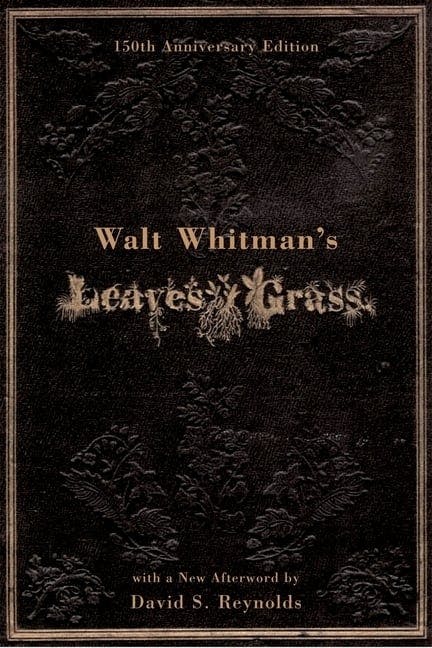
Step into the world of 'Leaves of Grass,' where Walt Whitman's revolutionary verses challenge conventions and celebrate the human experience. This landmark 1855 edition, praised by Ralph Waldo Emerson, introduced free verse and explored themes of unity and nature's sanctity. With its original design and insightful afterword, this edition invites readers to experience the raw power of Whitman's vision. What made this collection so extraordinary, and how did it shape American poetry? Dive into the pages that continue to inspire and provoke thought, capturing the essence of a nation's soul.
As featured in AMC’s Breaking Bad, given by Gale Boetticher to Walter White and discovered by Hank Schrader. I celebrate myself, And what I assume you shall assume, For every atom belonging to me as good belongs to you. I loafe and invite my soul, I lean and loafe at my ease….observing a spear of summer grass. So begins Leaves of Grass, the first great American poem and indeed, to this day, the greatest and most essentially American poem in all our national literature. The publication of Leaves of Grass in July 1855 was a landmark event in literary history. Ralph Waldo Emerson judged the book the most extraordinary piece of wit and wisdom America has yet contributed. Nothing like the volume had ever appeared before. Everything about it–the unusual jacket and title page, the exuberant preface, the twelve free-flowing, untitled poems embracing every realm of experience–was new. The 1855 edition broke new ground in its relaxed style, which prefigured free verse; in its sexual candor; in its images of racial bonding and democratic togetherness; and in the intensity of its affirmation of the sanctity of the physical world. This Anniversary Edition captures the typeface, design and layout of the original edition supervised by Whitman himself. Today’s readers get a sense of the ur-text of Leaves of Grass, the first version of this historic volume, before Whitman made many revisions of both format and style. The volume also boasts an afterword by Whitman authority David Reynolds, in which he discusses the 1855 edition in its social and cultural contexts: its background, its reception, and its contributions to literary history. There is also an appendix containing the early responses to the volume, including Emerson’s letter, Whitman’s three self-reviews, and the twenty other known reviews published in various newspapers and magazines. This special volume will be a must-have keepsake for fans of Whitman and lovers of American poetry.


Surprise a reader with their next favorite book.
Spotted a mistake or something missing? Improve this page.
Are you the author or illustrator? Claim your book.
Top contributors: Elaine R.