
Sale price
$1600
The Haunting of Hill House
Ages 18–+ · 1959
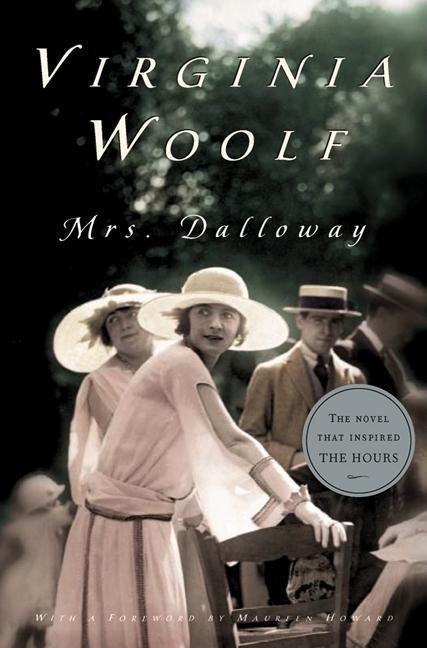
Written by Virginia Woolf
A day in a woman's life reveals past choices and future uncertainties.
Clarissa Dalloway prepares for a party, but her mind drifts through memories and reflections on her life choices. As she navigates the present, she confronts the passage of time and the looming reality of aging. What secrets and regrets will surface as she balances societal expectations with her inner world? Discover the profound within the mundane in this revolutionary exploration of a single day.
Heralded as Virginia Woolf’s greatest novel, this is a vivid portrait of a single day in a woman’s life. When we meet her, Mrs. Clarissa Dalloway is preoccupied with the last-minute details of party preparation while in her mind she is something much more than a perfect society hostess. As she readies her house, she is flooded with remembrances of faraway times. And, met with the realities of the present, Clarissa reexamines the choices that brought her there, hesitantly looking ahead to the unfamiliar work of growing old. “Mrs. Dalloway was the first novel to split the atom. If the novel before Mrs. Dalloway aspired to immensities of scope and scale, to heroic journeys across vast landscapes, with Mrs. Dalloway Virginia Woolf insisted that it could also locate the enormous within the everyday; that a life of errands and party-giving was every bit as viable a subject as any life lived anywhere; and that should any human act in any novel seem unimportant, it has merely been inadequately observed. The novel as an art form has not been the same since. “Mrs. Dalloway also contains some of the most beautiful, complex, incisive and idiosyncratic sentences ever written in English, and that alone would be reason enough to read it. It is one of the most moving, revolutionary artworks of the twentieth century.” –Michael Cunningham, author of The Hours


Surprise a reader with their next favorite book.
Spotted a mistake or something missing? Improve this page.
Are you the author or illustrator? Claim your book.
Top contributors: Elaine R.

