
Sale price
$1899
Of Walden Pond
Ages 6–9 · 2022
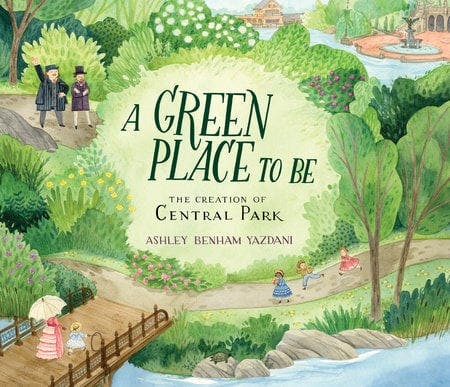
Written and illustrated by Ashley Benham Yazdani
Discover how visionaries transformed barren swampland into Central Park, New York's green heart.
In 1858, New York City faced a dilemma: rapid growth threatened its open spaces. Enter Calvert Vaux and Frederick Law Olmsted, whose visionary design turned barren swampland into Central Park. As the city expanded, they crafted a lush oasis with ponds, paths, and bridges. Their creation, a testament to human ingenuity, became a sanctuary for all. How did they overcome the challenges to create this urban masterpiece? Explore the journey of transforming a city's heart into a vibrant green gem, where nature and urban life coexist in harmony.
How did Central Park become a vibrant gem in the heart of New York City? Follow the visionaries behind the plan as it springs to green life. In 1858, New York City was growing so fast that new roads and tall buildings threatened to swallow up the remaining open space. The people needed a green place to be – a park with ponds to row on and paths for wandering through trees and over bridges. When a citywide contest solicited plans for creating a park out of barren swampland, Calvert Vaux and Frederick Law Olmsted put their heads together to create the winning design, and the hard work of making their plans a reality began. By winter, the lake opened for skating. By the next summer, the waterside woodland known as the Ramble opened for all to enjoy. Meanwhile, sculptors, stone masons, and master gardeners joined in to construct thirty-four unique bridges, along with fountains, pagodas, and band shells, making New York’s Central Park a green gift to everyone. Included in the end matter are bios of Vaux and Olmsted, a bibliography, and engaging factual snippets.
4.5
out of 7


Surprise a reader with their next favorite book.
Spotted a mistake or something missing? Improve this page.
Are you the author or illustrator? Claim your book.
Top contributors: Literary Leslie