
Sale price
$699
Ruby Goldberg's Bright Idea
Ages 8–12 · 2013
Part of the Smithsonian: Invention & Impact series
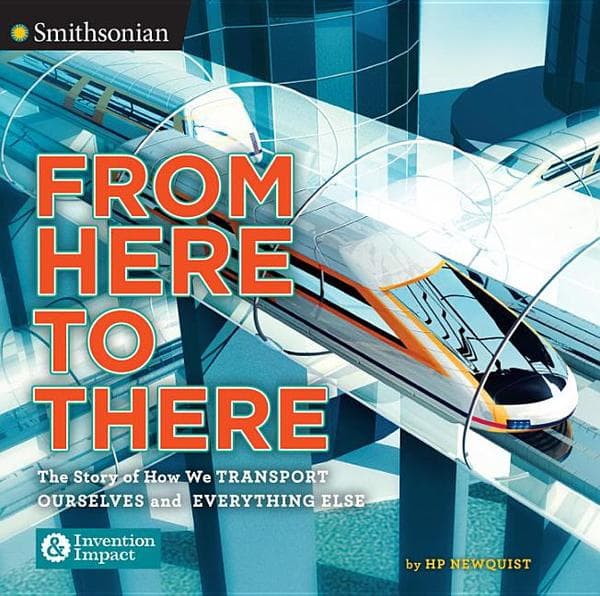
Explore humanity's journey from sandals to driverless cars, transforming how we live and move.
Embark on a journey through time, tracing humanity's relentless quest for movement. From the invention of the wheel to the rise of driverless cars, each leap in transportation technology has reshaped civilizations. Discover how Vikings conquered seas with keels, bicycles revolutionized women's freedom, and drones hint at our future. This exploration reveals the profound impact of our need to move faster and farther, challenging us to imagine what's next. How will the next innovation change our world?
This lively history of transportation follows our fascinating route from primitive technology like sandals to driverless cars and beyond! Since humans first stood upright, we’ve been on the move. Need food? Water? Land? A place to live? Survival depends upon motion. For thousands of years, people have devised ways to move faster, farther, and more comfortably. Their inventions–shoes, skis, the rudder, the wheel, engines, rockets–have had an enormous impact on how and where human beings live and thrive. When human beings get a move on, change happens: - The wheel, probably first used in the Middle East around 6,000 years ago, meant building and trading supplies could be moved more easily–whole civilizations rolled out.- The Vikings sailed far and wide because they used a keel on their longships. - Horse-and-carriage gridlock gave rise to subways. - The bicycle changed the world for women in terms of freedom and fashion.- Drones and driverless cars are the future . . . coming sooner than we think. Award-winning author HP Newquist explores the transportation inventions and technologies that have transformed the way we experience the world around us. It’s a fascinating journey!


Surprise a reader with their next favorite book.
Spotted a mistake or something missing? Improve this page.
Are you the author or illustrator? Claim your book.

