
Sale price
$1799
The Sea Knows
Ages 4–8 · 2020
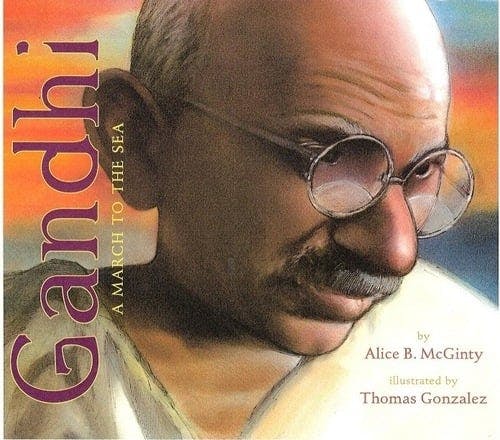
Written by Alice B. McGinty · Illustrated by Thomas Gonzalez
A 24-day march challenges oppressive salt taxes, igniting a peaceful revolution for independence.
In 1930, Gandhi leads a 24-day march to the sea, defying British salt taxes with non-violent protest. As over 70 followers join him, the stakes rise in India's fight for independence. Will this peaceful resistance, known as Satyagraha, succeed in challenging colonial rule? Discover the power of unity and determination in a pivotal moment of history.
Mohandas Gandhi’s 24-day March to the Sea, from March 12 to April 5, 1930, was a pivotal moment in India’s quest to become an independent country no longer ruled by Great Britain. With over 70 marchers, Gandhi walked from his hometown near Ahmedabab to the sea coast by the village of Dandi. The march was a non-violent means to protest the taxes that Great Britain had imposed on salt – not the salt that the Indians could get from the sea, but the salt that Great Britain forced them to buy. Gandhi believed that peaceful protests were an effective way to challenge British law, and his peaceful but ultimately successful movement became known as Satyagraha.


Surprise a reader with their next favorite book.
Spotted a mistake or something missing? Improve this page.
Are you the author or illustrator? Claim your book.
Top contributors: Literary Leslie
