
Sale price
$1699
The Wright Brothers
Ages 10–13 · 1991
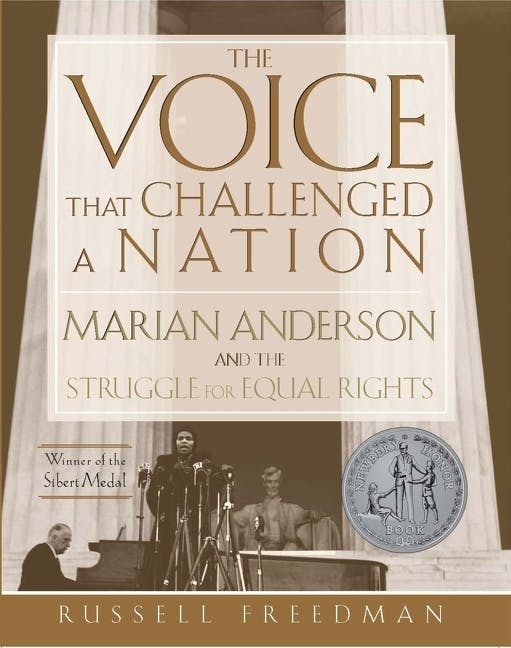
Written by Russell Freedman
A singer defies racial barriers, changing the course of history with her voice.
Marian Anderson, a gifted contralto, faces racial barriers in 1920s America. Her journey, marked by a historic 1939 Lincoln Memorial performance, challenges segregation in the arts. With support from figures like Eleanor Roosevelt, Anderson's voice becomes a symbol of hope and change. How does one woman's talent and determination alter the course of civil rights history?
Newbery Honor Book * Sibert Medal WinnerCarefully researched and expertly told, this Newbery Honor and Sibert Medal-winning book is a moving account of the life of a talented and determined artist who left her mark on musical and social history. Through her story, Newbery Medal-winning author Russell Freedman illuminates the social and political climate of the day and an important chapter in American history. Notes, bibliography, discography, index.”A voice like yours,” celebrated conductor Arturo Toscanini told contralto Marian Anderson, “is heard once in a hundred years.”This insightful account of the great African American vocalist considers her life and musical career in the context of the history of civil rights in this country. Drawing on Anderson’s own writings and other contemporary accounts, Russell Freedman shows readers a singer pursuing her art despite the social constraints that limited the careers of black performers in the 1920s and 1930s.Though not a crusader or a spokesperson by nature, Marian Anderson came to stand for all black artists–and for all Americans of color–when, with the help of such prominent figures as Eleanor Roosevelt, she gave her landmark 1939 performance on the steps of the Lincoln Memorial, which signaled the end of segregation in the arts.


Surprise a reader with their next favorite book.
Spotted a mistake or something missing? Improve this page.
Are you the author or illustrator? Claim your book.


