Sale price
$1595
Halloween Night on Shivermore Street
Ages 0–12 · 2004
Written by Pam Pollack Meg Belviso , and Who HQ · Illustrated by Jake Murray
Part of the Who Was . . . ? series
Discover how a Cuban singer became the Queen of Salsa and a symbol of artistic freedom.
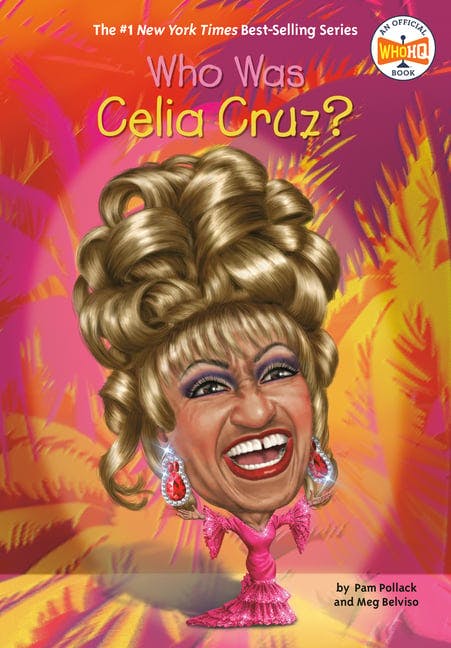
Celia Cruz, once a working-class girl from Cuba, became the Queen of Salsa and a beacon of artistic freedom. Rising to fame in the 1950s as the lead singer of Sonora Matancera, her powerful voice and vibrant style captivated audiences worldwide. Exiled after Castro's rise, Celia used her music to express love for her homeland, breaking barriers in a male-dominated genre. Her journey from Cuba to global stardom is a tale of resilience and passion. How did she transform into the most celebrated Latin artist of the twentieth century? Discover her story of triumph and legacy.
How did a working-class girl from Cuba become a symbol of artistic freedom for Cuban Americans and the Queen of Salsa? Find out in this addition to the Who HQ library! Although her family and friends know her as Úrsula Hilaria Celia de la Caridad Cruz Alfonso, the world refers to her simply as Celia Cruz. Starting her career in 1950, Celia grew increasingly popular as the new lead singer of the Cuban band Sonora Matancera. Her exceptional vocal range and flashy costumes made fans fall in love with her. Celia’s talent took her all around the world, including the United States. After Fidel Castro came to power in Cuba, she wasn’t allowed to return to her native country. She and other Cubans who were exiled used their music to express their love for their homeland. Celia rose to the top of the charts in a genre that was dominated by men. She become an award-winning singer and the most popular Latin artist of the twentieth century. Azucar! indeed!

Surprise a reader with their next favorite book.
Spotted a mistake or something missing? Improve this page.
Are you the author or illustrator? Claim your book.
Top contributors: Literary Leslie · Elaine R.