
Sale price
$1895
Separate Is Never Equal
Ages 6–9 · 2014
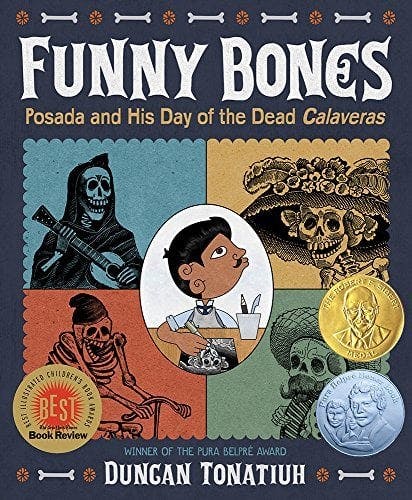
Written by Duncan Tonatiuh
Uncover the origins of Día de Muertos skeletons and the artist who defied censorship with humor.
Explore the life of José Guadalupe Posada, the artist behind Mexico's iconic Día de Muertos skeletons. In a land stifled by censorship, Posada's political cartoons amused the public but irked politicians. His calaveras, skeletons engaged in lively activities, became symbols of celebration and satire. Through vivid illustrations, discover how Posada's art, once obscure, now embodies the spirit of a festival. What drove him to create these enduring images, and how did they capture the essence of life and death? Dive into a world where art defies silence and celebrates the human experience.
Funny Bones tells the story of how the amusing calaveras—skeletons performing various everyday or festive activities—came to be. They are the creation of Mexican artist José Guadalupe (Lupe) Posada (1852–1913). In a country that was not known for freedom of speech, he first drew political cartoons, much to the amusement of the local population but not the politicians. He continued to draw cartoons throughout much of his life, but he is best known today for his calavera drawings. They have become synonymous with Mexico’s Día de los Muertos (Day of the Dead) festival. Juxtaposing his own art with that of Lupe’s, author Duncan Tonatiuh brings to light the remarkable life and work of a man whose art is beloved by many but whose name has remained in obscurity.


Surprise a reader with their next favorite book.
Spotted a mistake or something missing? Improve this page.
Are you the author or illustrator? Claim your book.