
Sale price
$799
Where Is the Grand Canyon?
Ages 8–12 · 2015
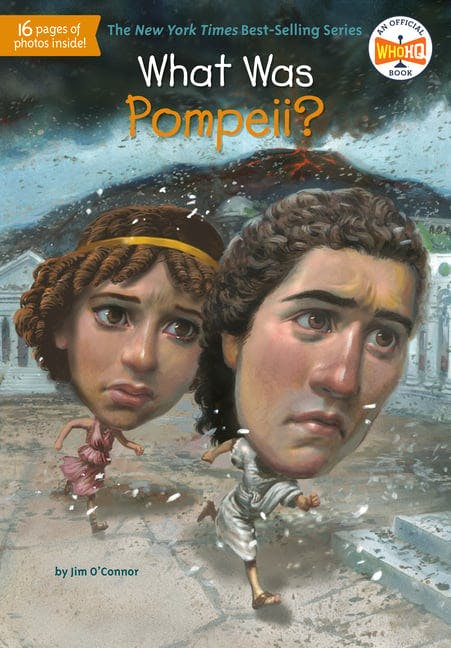
Written by Jim O'Connor and Who HQ · Illustrated by John Hinderliter
Part of the What Was . . . ? series
The eruption of Mount Vesuvius in 79 AD destroyed the Roman city of Pompeii, killing thousands of people and burying the city under volcanic ash.
On a seemingly ordinary day in AD 79, Pompeii faces an unimaginable catastrophe as Mount Vesuvius erupts, burying the city in ash. Thousands perish, and the city vanishes from memory for centuries. In 1748, explorers uncover the lost city, revealing stunning mosaics and preserved ruins. What secrets lie beneath the ash, and what stories do the ruins tell of a day that changed history forever?
The morning of August 24, AD 79, seemed like any other in the Roman city of Pompeii. So no one was prepared when the nearby volcano Mount Vesuvius suddenly erupted, spouting ash that buried the city and its inhabitants. The disaster left thousands dead, and Pompeii was no more than a memory for almost 1,700 years. In 1748, explorers rediscovered the port city with intact buildings and beautiful mosaics. This easy-to-read account is gripping and includes photos of the ruins.


Surprise a reader with their next favorite book.
Spotted a mistake or something missing? Improve this page.
Are you the author or illustrator? Claim your book.
Top contributors: Literary Leslie · Elaine R.


